
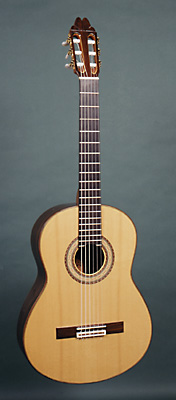
Welcome to the fantastic world of classical guitar. In this site, you will find classical guitar pieces, in midi format, for one and more guitars: actually 5641 MIDI files from 96 composers. Information on how to create midi files and a tutorial on the tablature notation system is presented. Images of ancient guitars provided.
|
|
Wait, but how do I ensure the blog post is exclusive? Maybe because the actual PDF isn't openly available, but I can discuss the content, its significance, and its applications. Also, perhaps highlight why this resource is important for chemists or students. I should mention its structure, the way he explains complex ideas, maybe the use of examples or case studies from his research.
I should structure the blog post into sections: Introduction, Overview of Stereochemistry, Key Contributions of Subrata Sengupta, Unique Aspects of the PDF, Applications and Impact, and Conclusion. Also, add a disclaimer about respecting copyright. Make sure to cite any references where appropriate, even if I haven't found the PDF online, because mentioning academic resources should be done responsibly.
First, I know that stereochemistry is a branch of chemistry dealing with the spatial arrangement of atoms in molecules. So, Sengupta's work here is probably about how molecules are structured in 3D space and how that affects their properties and reactions. But what specifically makes his work unique or notable? Maybe he has developed certain methodologies or theories in this area.
Composers are grouped in 6 pages: A-B;
C-F;
G-L;
M-O;
P-R; S-Z .
J.-S.
Bach , A.
Barrios Mangore , N. Coste
, M. Giuliani , F.
Sor and F.
Tarrega are on their own page
Click here
to listen to 20 great MIDI from the site
Composers in alphabetical order
Wait, but how do I ensure the blog post is exclusive? Maybe because the actual PDF isn't openly available, but I can discuss the content, its significance, and its applications. Also, perhaps highlight why this resource is important for chemists or students. I should mention its structure, the way he explains complex ideas, maybe the use of examples or case studies from his research.
I should structure the blog post into sections: Introduction, Overview of Stereochemistry, Key Contributions of Subrata Sengupta, Unique Aspects of the PDF, Applications and Impact, and Conclusion. Also, add a disclaimer about respecting copyright. Make sure to cite any references where appropriate, even if I haven't found the PDF online, because mentioning academic resources should be done responsibly. subrata sengupta stereochemistry pdf exclusive
First, I know that stereochemistry is a branch of chemistry dealing with the spatial arrangement of atoms in molecules. So, Sengupta's work here is probably about how molecules are structured in 3D space and how that affects their properties and reactions. But what specifically makes his work unique or notable? Maybe he has developed certain methodologies or theories in this area. Wait, but how do I ensure the blog post is exclusive
Note to MIDI sequence contributors
Your submissions are welcomed.
Please send them by e-mail (end of text). Pieces
should bear the composer's name and be properly identified.(ex.: J.K. Mertz (1806-1856) Nocturne
Op.4 No.2.). The submissions
should bear information on the transcriber or arranger when available. The submitter's name
will appear beside the accepted submission.
This site exists primarily to showcase pieces written for the classical
guitar. Established and recognized transcriptions and arrangements (e.g.,
Tarrega, Segovia,..) of pieces written by non-guitar composers will also be given
high priority.
New compositions for the classical guitar are also welcomed. New
compositions that meet quality guidelines will be added to the site. For
new contributors, it would be appreciated if you would also submit several
pieces by known composers in addition to your own compositions. This will
help to expand the repertoire of established works for the classical guitar in
addition to expanding the repertoire of new music.
Last update: March 8 2026
Copyright François Faucher 1998-2025
 G.F.Handel's Sonata 2. Allegro
3.Adagio HWV368
G.F.Handel's Sonata 2. Allegro
3.Adagio HWV368